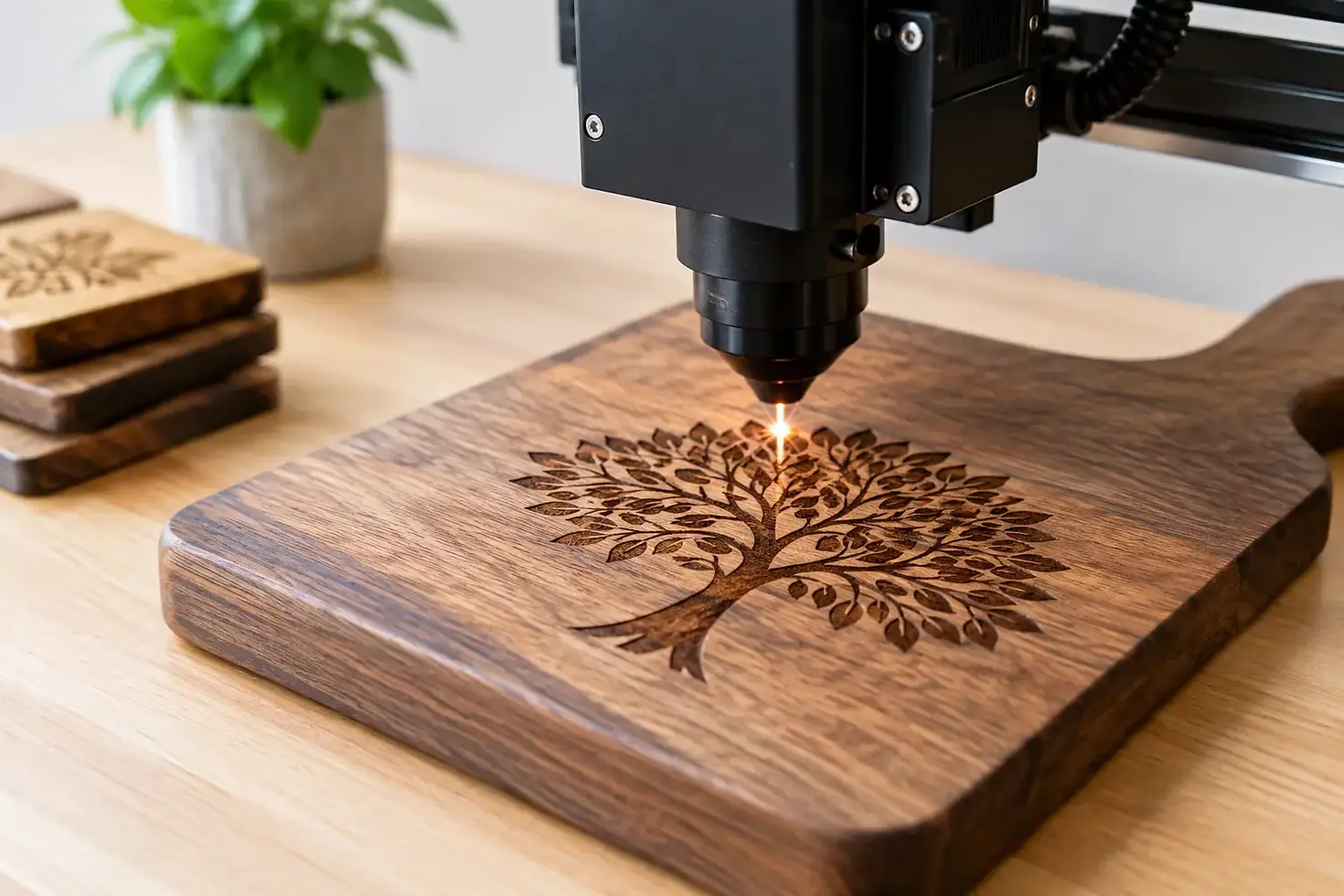
Laser Engraving Wood Services for Custom Pieces
A family name on the underside of a dining table, a company mark burned into a reception desk, or a favorite saying set into a walnut bar top can change a beautiful wood piece into something unmistakably personal. Laser engraving wood services bring that kind of detail directly into the material, creating a permanent mark that feels intentional rather than applied as an afterthought.
At Bull Valley Custom Woodworks, we see engraving as one more way to make custom work belong to the people and places it serves. It can be subtle, bold, sentimental, practical, or all four at once. The best results begin with a clear purpose, the right wood species, and a design sized for the piece itself.
What Laser Engraving Adds to Woodwork
Laser engraving uses controlled heat to remove a shallow layer of wood and create contrast in the grain. Unlike a printed graphic, vinyl decal, or surface-mounted plaque, the design becomes part of the wood. A professional finish can then protect the engraved area along with the rest of the piece.
That permanence makes engraving especially well suited to heirloom furniture, architectural millwork, branded business fixtures, and meaningful gifts. It also gives designers another dimension to work with. A clean logo can anchor a commercial sign, while a small inscription on a keepsake box can remain private until the lid is opened.
Engraving does not need to dominate a project. On a large live-edge slab table, for example, a discreet maker's mark or family date may be all the detail the piece needs. On a wall sign or display panel, the engraving can become the visual focal point. Scale, placement, and contrast should follow the intended use of the finished piece.
Where Custom Engraving Works Best
The most successful engraved projects start with an object that already has a reason to last. Hardwood serving boards, memory boxes, charcuterie boards, cabinet panels, desk accessories, signage, and display pieces are natural candidates. Engraving also adds character to custom furniture, from a wedding date on a bench to a monogram inside a desk drawer.
For homeowners, laser work can solve a design problem that standard furniture cannot. A built-in bar can carry a family crest. A mudroom locker system can include engraved nameplates. A custom bedroom set may include a small phrase or graphic that reflects the room's purpose without turning it into novelty décor.
For contractors, builders, and commercial clients, engraving can serve a practical role. Branded wood signage, room identifiers, donor walls, menu boards, product displays, and wayfinding components benefit from durable lettering that will not peel away. When the engraved element is fabricated alongside the rest of the millwork, material, finish, and dimensions can be coordinated from the beginning.
Choosing Wood for Laser Engraving Wood Services
Not every species reacts the same way under a laser. The wood's density, grain pattern, natural color, resin content, and finish all affect the result. That variation is part of the appeal of real hardwood, but it also means a test engraving is valuable before committing to a final panel or completed piece.
Light woods create strong contrast
Maple, birch, and basswood often produce crisp, dark engraving with easy-to-read lettering. Their lighter natural color gives logos, line art, and fine text visual definition. Maple is particularly useful when a client wants a clean, contemporary appearance on a durable hardwood surface.
Dark woods deliver a quieter look
Walnut has deep natural character, but an engraved mark may read more subtly than it would on maple. That can be exactly right for a refined monogram, a dark-and-moody bar detail, or a piece where the grain should remain the star. Larger artwork, bolder type, or a carefully considered fill treatment may improve readability when needed.
Grain is beautiful, but it has a say
Oak, hickory, ash, and other open-grain woods bring texture and movement to a project. They can create striking engraved results, especially for rustic signage and architectural elements, but very small lettering may not appear as even as it would on a closed-grain species. A design that looks excellent on a computer screen can lose clarity if its lines are too thin for the selected wood.
This is why wood selection should come before finalizing artwork. We work with more than 70 hardwood species, so clients are not limited to choosing between a generic light board and a generic dark board. The right material can support the design while also matching the cabinetry, countertop, furniture, or trim already planned for the space.
From Artwork to a Finished Piece
A strong engraving begins with artwork that is prepared for wood, not simply copied from a business card or social media graphic. High-resolution vector artwork generally produces the cleanest lines because it can be scaled without becoming blurry. Logos with fine gradients, tiny type, or crowded details may need to be simplified so they remain sharp at the intended size.
Placement matters just as much. An engraving on a serving board needs space around it so food, handles, and normal wear do not compete with the design. A logo on a reception counter should be positioned for the viewer's sightline, not merely centered on the raw panel. On furniture, we consider how grain direction, edge profiles, hardware, and joinery will affect the final view.
The finish schedule should also be part of the conversation. Some finishes deepen the wood's color and soften contrast, while others preserve a more natural appearance. If a piece will see heavy use, such as a bartop or countertop, the engraving must work within a finish system chosen for durability and maintenance, not just appearance.
Laser Engraving Wood Services for Trade Projects
For commercial and specification-driven work, consistency is often the deciding factor. A single engraved plaque is one thing. A set of matching room signs, branded display components, or engraved panels for a larger build requires repeatable sizing, material control, and careful scheduling.
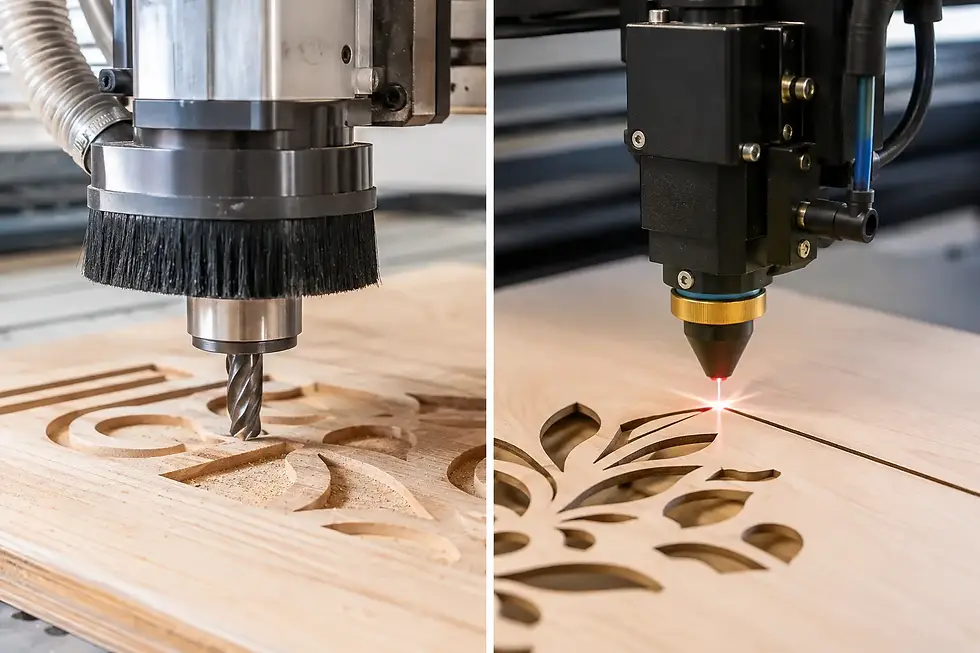
Our shop capabilities allow engraving to be considered alongside CNC work, slab flattening, widebelt sanding, precision fabrication, and professional finishing. That is useful when a project needs more than an engraved board. A contractor may need engraved hardwood panels integrated into cabinetry, a retail fixture built to precise dimensions, or signage that matches custom trim and millwork throughout a space.
Bringing those steps together also reduces the risk of a finished component being altered after engraving. Wood movement, final sanding, edge shaping, and finishing all affect the appearance of a mark. Planning the sequence correctly protects the design and helps keep the project on schedule.
Design Details That Keep Engraving Timeless
The temptation with personalization is to add everything: names, dates, logos, artwork, quotes, and decorative borders. Sometimes that is right for a commemorative piece. More often, restraint produces a result that will still feel appropriate years from now.
Choose one focal message and give it room to breathe. Use type that fits the character of the project. A traditional serif may suit a formal walnut desk, while simple sans-serif lettering may be better for a modern maple sign. Avoid placing critical details too close to a board edge, sink cutout, handle opening, or area that will receive repeated abrasion.
Most of all, let the material remain visible. Wood has grain, color shifts, knots, and natural variation that manufactured surfaces cannot imitate. The engraving should work with that character, not bury it.
If you have an idea for a personalized furniture piece, branded fixture, meaningful gift, or engraved architectural detail, bring us the purpose behind it along with any artwork or inspiration you have. We can help match the design to the right hardwood, construction method, and finish so the finished piece feels made for your space from the first look to years of everyday use.

Comments