Stair Railing Design That Feels Built In
A stairway is crossed dozens of times a day, yet it is often one of the first architectural details guests notice. The right stair railing design can make an ordinary staircase feel grounded, intentional, and fully connected to the rest of the home. The wrong one can interrupt an otherwise beautiful renovation with parts that feel too thin, too bulky, or simply out of place.
At Bull Valley Custom Woodworks, we see railings as more than a code requirement or a finishing detail. They are working architectural pieces that deserve the same thought given to cabinetry, flooring, trim, and furniture. A well-made wood handrail has to feel good under the hand, hold up to daily use, and bring warmth to a space that is often full of hard surfaces.
Start With How the Stairway Works
Before choosing a species or sketching a newel post, look closely at the stairway itself. Is it the main route between floors? Does it open into a foyer, kitchen, or great room? Is it enclosed by walls, or is it visible from several angles? The answers shape the railing more than any trend does.
An open staircase can carry a more sculptural design because the railing is visible from the surrounding rooms. In a narrow enclosed stair, comfort and clearance may matter most. A handrail that projects too far or uses oversized components can make a tight stair feel even tighter. Conversely, a broad, open entry may need substantial posts and a fuller rail profile so the assembly does not disappear into the space.
It also helps to separate two terms that are often used interchangeably. A handrail is the graspable piece intended to support someone using the stairs. A guardrail is the protective barrier along an open side, landing, or balcony. They may be incorporated into one coordinated assembly, but they serve different jobs. Designing both with that distinction in mind helps create a railing that is comfortable, safe, and visually balanced.
Let the Wood Set the Tone
Wood is where a custom railing gains its character. The species, grain direction, color variation, and finish can either blend into the home or become a feature of its own.
White oak is a strong choice for clean-lined homes, especially when paired with a natural or lightly toned finish. Its grain gives the railing texture without making it feel busy. Walnut brings deeper color and a more formal presence, making it especially striking in an entry with light walls or pale flooring. Hard maple offers a smoother, more uniform look and works beautifully when a crisp painted or light-stained appearance is the goal.
Matching the railing exactly to the floor is not always necessary. In fact, wood-on-wood spaces often look more considered when the tones relate rather than match perfectly. A walnut rail can add depth above white oak flooring. A painted stair system may benefit from a natural hardwood handrail that picks up the tone of a nearby island, mantel, or built-in.
Solid hardwood is particularly valuable in high-touch areas. It can be shaped with clean, comfortable edges, sanded smooth, repaired when needed, and refinished years down the road. That long-term serviceability is one of the quiet advantages of building a railing as a real piece of millwork rather than treating it as a disposable construction component.
Stair Railing Design Is About Proportion
The most successful railings do not rely on one showy element. They work because each part has the right visual weight. The handrail, posts, balusters or infill, stair treads, and surrounding trim should feel like they belong to the same house.
A large square newel post can anchor a traditional staircase, but it may overpower a modest ranch renovation or a contemporary loft. Slim, squared-off posts can suit a modern interior, though they need enough thickness to look purposeful and support the structure properly. Curved or turned profiles bring a classic look, especially in historic homes, but their detail should be echoed somewhere else, such as door casing, cabinetry, or furniture.
The handrail deserves particular attention because it is both seen and used. Some profiles are highly decorative, while others are almost architectural in their simplicity. What matters most is that the rail is comfortable to grip and feels appropriate for the home. A profile that looks great in a showroom may not feel natural in the hand or fit cleanly against an existing wall.
Choose Infill for Light, Privacy, and Maintenance
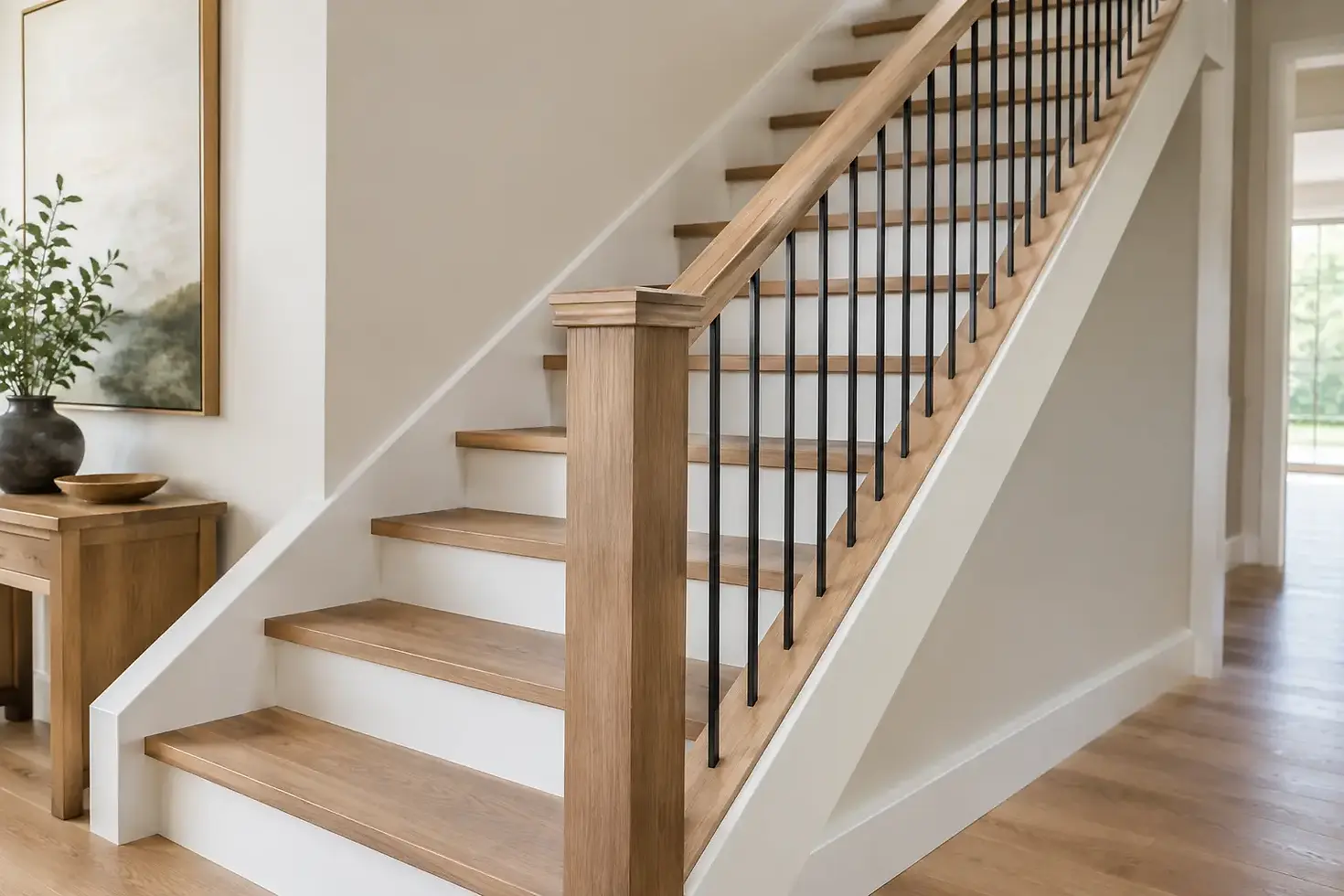
Balusters and infill define how open a stairway feels. Traditional wood balusters create rhythm and can make an entry feel established and warm. Square wood balusters are versatile, moving easily between farmhouse, transitional, and contemporary styles depending on the rail profile and finish.
Metal balusters create a stronger contrast against hardwood and can reduce visual bulk. Simple black iron, for example, works well with white oak, walnut, or painted wood components. Cable and glass systems can preserve sightlines, which can be appealing near windows, views, or open living spaces. Those options come with trade-offs. Glass shows fingerprints, cable systems may require periodic tension checks, and metal introduces a different tactile quality than an all-wood railing.
For many homes, the best answer is a mixed-material system: custom hardwood posts and handrails with a simpler metal infill. It preserves the warmth and craftsmanship of wood while allowing light to pass through the stairway. The choice depends on the level of openness you want, the architecture of the home, and how much ongoing maintenance feels realistic for your household.
Make Connections Look Intentional
A railing can be made from beautiful hardwood and still look unfinished if the transitions are not resolved carefully. The point where a handrail meets a wall, turns at a landing, or joins a newel post is where craftsmanship becomes especially visible.
Continuous handrails often create the cleanest visual flow. At a landing, a properly planned transition keeps the rail useful and avoids awkward interruptions. At walls, a custom return can make the ending feel deliberate while reducing the chance of catching clothing or bags on an exposed edge.
Newel posts also need to connect convincingly to the stair structure and surrounding floor. A post sitting on a thin trim cap or attached as an afterthought will never have the same presence as one planned into the assembly. These details are rarely accidental in a finished home. They are the result of measuring, fitting, and thinking through the installation before fabrication begins.
Select a Finish for Real Life
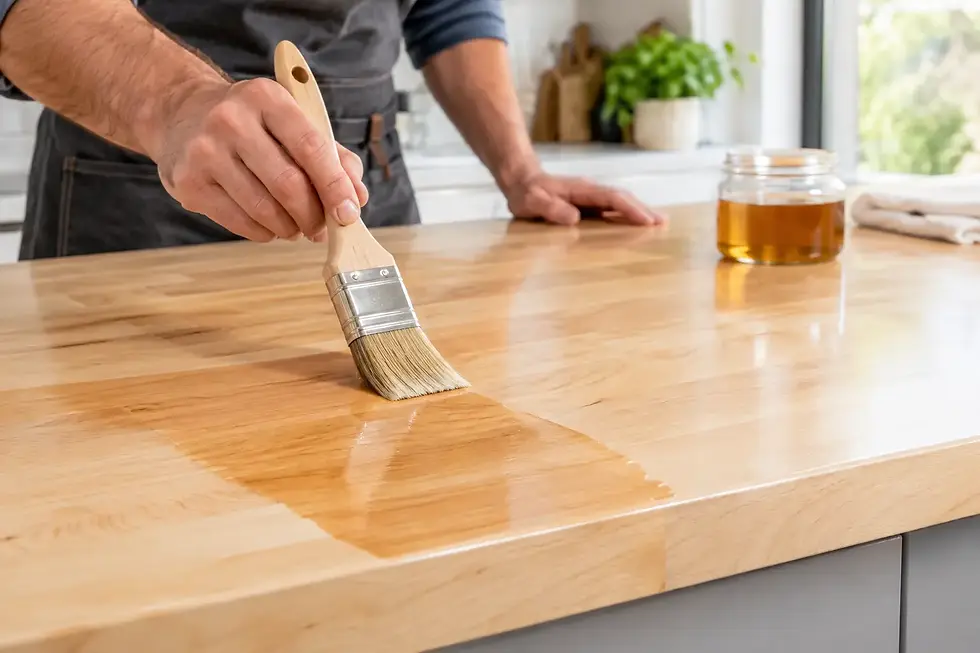
A stair railing gets touched more than most woodwork in a home. That means the finish needs to protect the wood without making it feel plastic or overly glossy. For many projects, a durable low-sheen finish offers the best balance. It lets the grain remain visible, feels natural under the hand, and is more forgiving of small marks than a high-gloss surface.
Color should be tested on the actual species being used. Stain behaves differently on maple than it does on oak or walnut, and lighting can change the result dramatically from one room to another. We recommend viewing finish samples near the stairs at different times of day, alongside flooring, wall color, and nearby cabinetry.
Paint can be equally effective, especially when it ties into existing trim. A painted guardrail with a natural wood cap rail creates a layered look that suits many older homes. It is not a lesser choice than clear-finished wood. It is simply a different design decision, with its own maintenance needs and visual effect.
Build Safety Into the Design From Day One
Railing projects must meet applicable building requirements, including rules for height, spacing, graspability, structural attachment, and stair geometry. Requirements can vary based on the location, whether the space is residential or commercial, and the condition of the existing staircase.
This is why code considerations should guide the design from the first conversation, not be checked after materials are ordered. A beautiful concept may need adjustment if the spacing is too wide, the rail cannot be comfortably grasped, or the structure behind a wall cannot support the intended attachment. Working those realities into the plan early protects both the look of the project and the people who will use it.
For remodels, existing conditions matter just as much as the desired style. Uneven floors, old framing, plaster walls, and nonstandard stair dimensions are common. A custom approach allows each component to be fabricated for the actual space instead of forcing stock parts to fit.
From Sketch to Finished Stairway
The best railing projects begin with a conversation about the home, not a catalog page. We look at sightlines, materials already in the space, traffic patterns, desired finishes, and the small details that make the home feel personal. From there, we can select hardwood, develop profiles, fabricate components with precision, and finish the pieces for the environment where they will live.
A custom stair railing is an opportunity to turn a necessary route through the house into a lasting feature. Choose materials and proportions that feel right every time your hand meets the rail, and the staircase will do more than connect two floors. It will help the whole home feel more thoughtfully made.

Comments