
Best Materials for Staircase Railings at Home
A staircase railing is one of the first architectural details people notice when they enter a home. It sits at eye level, follows the movement of the stairs, and gets touched every day. Choosing the best materials for staircase railings is not simply a matter of matching a finish. It is a decision about safety, maintenance, proportion, and how the home should feel for years to come.
For a warm traditional home, a carefully shaped hardwood handrail may be the detail that makes a renovation feel complete. For a modern open-concept space, steel or glass can preserve sightlines and bring a lighter visual profile. The right answer depends on the architecture, the people using the stairs, and whether the goal is to make the railing stand quietly in the background or become a defining feature of the room.
The Best Materials for Staircase Railings: Start With the Space
Before selecting a species, metal finish, or baluster pattern, look at what the staircase needs to do. A railing beside a narrow enclosed stair has different demands than one surrounding an open loft or dropping into a two-story foyer. A busy family home needs a handrail that feels comfortable and forgiving in daily use. A commercial setting may require a more specification-driven approach and particularly durable finishes.
Safety comes first. Railing height, baluster spacing, handrail continuity, attachment methods, and load requirements are governed by local building codes. Those requirements can affect the design more than homeowners expect, especially when replacing an older railing. A beautiful material cannot compensate for a railing that is uncomfortable to grip or improperly supported.
Then consider the visual weight. Dark stained wood and black steel create a strong outline against pale walls. Glass reduces visual interruption but asks the stair structure and surrounding finishes to carry more of the design. Natural hardwood adds depth that changes with the light, which is often exactly what a home with painted trim, stone, or plaster walls needs.
Hardwood: The Enduring Choice for Handrails
Hardwood remains one of the finest materials for a staircase handrail because it combines strength, warmth, and a comfortable feel in the hand. Unlike a cold metal rail, wood has a natural softness to the touch without sacrificing durability when properly selected and finished. It can also be shaped into profiles that fit the architecture rather than forcing the project into a stock design.
White oak is a favorite for its clean grain, excellent durability, and versatility. It can be kept natural for a lighter, contemporary look, fumed or stained for depth, or finished in a tone that works with existing floors. Red oak remains a practical option for traditional interiors, especially where it matches original flooring or trim, though its grain pattern is more pronounced.
Walnut brings a richer, more tailored character. Its naturally dark color makes a beautiful contrast against white walls, light stone, or painted cabinetry, and it works especially well in homes where the railing is meant to feel like furniture. Maple offers a smooth, refined grain and a lighter appearance, while hickory provides dramatic variation and exceptional hardness for homeowners who want a more rustic or organic result.
The trade-off with hardwood is maintenance and finish selection. A handrail sees oils from hands, seasonal humidity changes, and occasional impacts from bags or furniture. A professional-grade finish helps protect the surface, but no clear coat makes wood indestructible. Choosing a species and finish with the right level of character matters. A handrail that develops a subtle patina may be ideal in a lived-in family home, while a highly uniform finish may suit a more formal setting.
Solid wood versus wood veneer
For a handrail, solid hardwood is generally the better choice. It allows for custom shaping, clean returns, strong joinery, and future refinishing if needed. Veneer can be appropriate for certain flat architectural panels or decorative elements, but it is not the same long-term material solution for a handrail that must perform under constant use.
At Bull Valley Custom Woodworks, we often encourage clients to view the railing as part of a larger wood story in the home. Matching a handrail to a custom newel post, stair treads, flooring accents, or adjacent cabinetry creates continuity without making every surface identical.
Steel and Wrought Iron: Strong Lines With Less Visual Bulk
Steel railings are a natural fit for industrial, transitional, and contemporary homes. Their strength allows for slim profiles and open designs that wood balusters cannot always achieve. Black powder-coated steel is particularly popular because it offers crisp contrast and works with many finish palettes, from warm white oak stairs to concrete-look tile and natural stone.
For a more traditional look, wrought iron or forged-style balusters can add ornamental detail. Twists, scrolls, and decorative collars suit historic homes or spaces with more formal millwork. The risk is overdesign. An ornate iron pattern can compete with detailed trim, busy flooring, or a dramatic chandelier. In many homes, a simpler square or round steel baluster looks more current and lets the staircase itself remain the focal point.
Metal is extremely durable, but the finish matters. Interior steel should be properly prepared and coated to resist scratches and corrosion. It can also feel cool in the hand, which is why many projects pair metal balusters with a hardwood top rail. That combination gives the staircase structural clarity from the metal and everyday comfort from the wood.
Glass Railings: Light, Open, and Demanding of Detail
Glass railing systems are the best choice when preserving a view or bringing daylight through the stairwell is the priority. They are especially effective beside open landings, lofts, and contemporary staircases where traditional balusters would visually close off the room. Clear panels can make a compact home feel noticeably larger.
The material must be designed and installed correctly. Stair railings use safety-rated glass, typically tempered or laminated depending on the system and code requirements. Hardware, edge treatment, panel thickness, and attachment points are not decorative afterthoughts. They determine whether the finished railing feels clean and secure.
Glass does require regular cleaning. Fingerprints, dust, and pet nose prints show more readily than they do on wood or steel. It also offers little visual softness, so it can feel out of place in a heavily traditional home unless paired with warm hardwood components. A wood cap rail over glass is often an excellent compromise: the glass keeps the view open, while the wood gives the staircase warmth and a familiar handhold.
Cable and Stainless Steel: Best for Modern, View-Focused Homes
Cable railing uses tensioned stainless-steel cables between posts to create a nearly transparent barrier. It is popular in modern homes, lake houses, and spaces with large windows because it interrupts views less than most baluster systems. Stainless steel resists corrosion well, making it a strong option for covered exterior stairs too.
Its main limitation is code and upkeep. Cables must be tensioned correctly and maintained over time. Depending on the layout, they may not be appropriate for homes with small children because they can create a climbable horizontal pattern. For an interior family staircase, vertical steel balusters or glass are often easier to live with while delivering a similarly open effect.
Mixing Materials Creates a More Custom Result
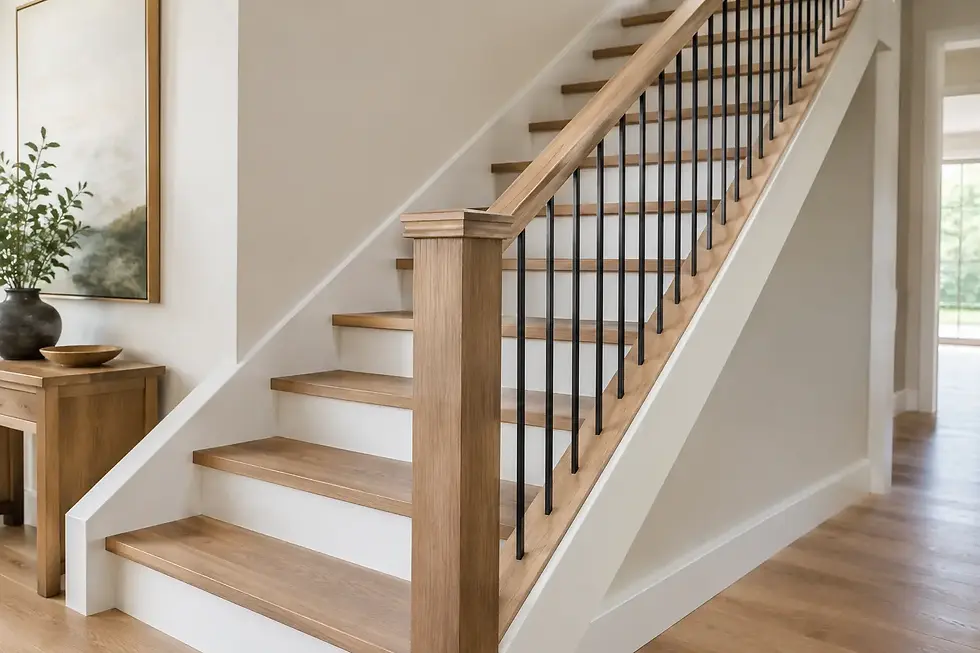
Some of the most successful stair railings are not made from one material alone. A white oak handrail with black steel balusters feels grounded and current. Walnut with clear glass feels refined without becoming cold. Steel posts with a shaped hardwood cap can bridge a modern renovation and an older home’s existing trim.
This is where proportion matters more than trends. A substantial square newel post can anchor thin metal balusters. A floating stair may call for a restrained rail profile so it does not look heavy. If a home already has strong wood grain in the floors and cabinetry, a quieter railing species or lower-contrast finish may provide balance.
Choosing a Material That Will Still Feel Right Later
The best railing material is usually the one that supports the home’s architecture instead of chasing a single style moment. Hardwood has the longest visual lifespan because it can be refinished, repaired, and adapted as surrounding finishes change. Steel is hard to beat for clean lines and low maintenance. Glass is exceptional when light and sightlines are nonnegotiable.
Bring samples into the actual stairwell before making the final call. Look at them in morning light, evening light, and beside the flooring, wall color, and nearby cabinetry. Then choose the material that makes you want to put your hand on the rail every time you go upstairs - that is often the detail that turns a staircase into part of the home’s character.

Comments