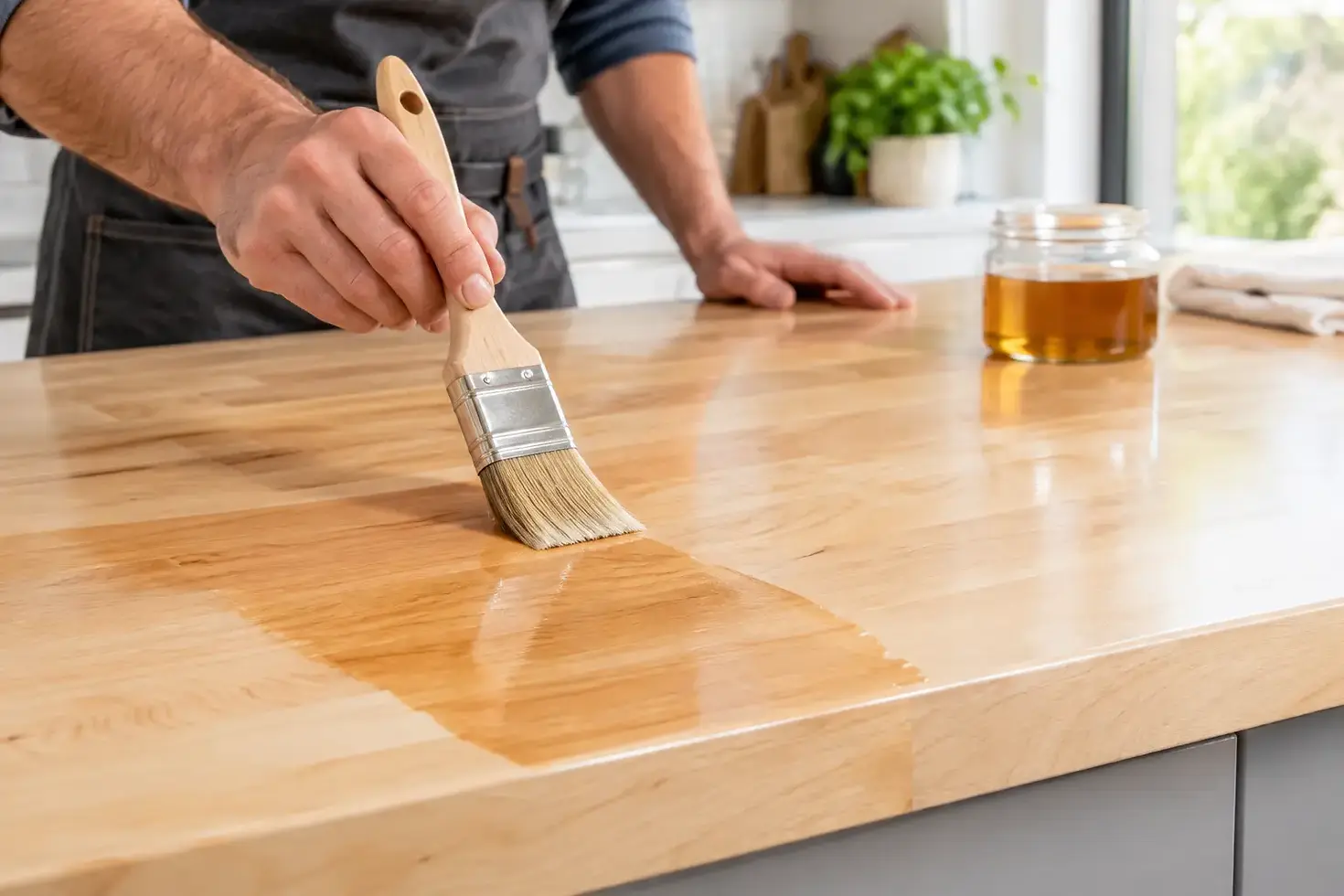
How to Finish Maple Countertops for Lasting Beauty
Maple earns its place in a hardworking kitchen because it feels clean, warm, and quietly refined without being fragile. But how you finish maple countertops determines whether that pale, even grain stays beautiful or becomes marked by water, stains, and uneven color. The right finish begins well before the final coat. It starts with selecting sound lumber, preparing the surface with care, and matching the finish system to the way the countertop will actually be used.
At Bull Valley Custom Woodworks, we build countertops from raw hardwood through professional finishing, so we see every part of that process as connected. A maple island used for family meals needs a different level of protection than a maple bar top, bathroom vanity, or desk surface. The goal is not simply to make the wood look finished. It is to build a surface that performs beautifully in your space.
Why Maple Requires a Thoughtful Finish
Hard maple is dense, durable, and naturally smooth-grained. It resists everyday dents better than many domestic hardwoods, which makes it a strong choice for countertops, butcher-block islands, bartops, and work surfaces. Its light color also works exceptionally well in kitchens with painted cabinetry, natural stone, black hardware, or a modern mix of wood and metal.
That same density can make maple less forgiving during finishing. Maple can absorb stain unevenly, creating blotchy patches that distract from its naturally subtle figure. It also shows sanding marks, glue residue, and inconsistent application more readily than woods with a stronger, more open grain pattern.
For many projects, we recommend allowing maple to remain close to its natural color. A clear finish highlights its creamy base tone and fine grain without trying to make it resemble walnut or cherry. Maple does warm over time, especially in rooms with natural light, developing a softer honey tone that many homeowners appreciate. If a darker color is essential, a carefully controlled dye or toner approach generally produces more even results than a conventional penetrating stain.
Choose the Finish Based on How the Countertop Will Be Used
There is no single best finish for every maple countertop. A kitchen perimeter counter beside a sink faces standing water, cleaning products, and daily food prep. A bar top sees glasses, spills, and frequent wiping. A freestanding butcher-block worktop may be used as a direct cutting surface. Each application asks something different of the finish.
Film finishes for kitchens, bars, and vanities
For most installed countertops, a professionally applied film finish provides the most practical protection. These finishes cure into a protective layer over the wood, helping resist water, staining, and routine wear. Quality waterborne finishes are often a strong choice for maple because they preserve its lighter appearance better than many oil-based finishes, which can add a deeper amber cast from the start.
For a kitchen countertop, bar top, or bathroom vanity, we typically look for a finish system with strong water and chemical resistance. The exact product and schedule depend on the project, but the principle remains the same: several properly cured coats will outperform a single heavy application. A satin sheen is a popular middle ground. It has enough reflectivity to make the maple feel finished while doing a better job of disguising fingerprints and small scratches than a high-gloss surface.
A film finish is not a cutting board. Even a durable professional coating can be cut, gouged, or damaged by knives. Use a cutting board for food preparation, trivets for hot cookware, and felt or cork beneath rough-bottomed décor.
Oil finishes for true cutting surfaces
If the maple surface will be used directly for chopping and slicing, a renewable food-grade oil finish is usually the better direction. Mineral oil and board-specific oil-and-wax systems soak into the wood rather than creating a hard surface film. They are easy to refresh in a spot, which is a major advantage when a worktop develops dry areas or knife marks.
The trade-off is maintenance. Oiled maple needs periodic reapplication, especially during its first year of use. It is also less resistant to standing water, oils, wine, and strongly colored foods than a cured film finish. Homeowners who love the tactile, working character of a true butcher block often find that trade-off worthwhile. Those who want a lower-maintenance island generally prefer a protective film finish and a separate cutting board.
How We Finish Maple Countertops for a Smooth Result
A durable finish cannot hide poor preparation. It amplifies it. Before finishing maple, we inspect the surface under changing light, ease sharp edges, and sand in a controlled progression. The goal is a consistent surface that feels smooth without polishing the wood so aggressively that it resists even absorption where a penetrating treatment is planned.
Glue squeeze-out deserves particular attention. On light maple, even a thin, nearly invisible residue can prevent finish from taking evenly and leave a dull patch. We remove it carefully rather than assuming later sanding will solve the issue. End grain along exposed edges and cutouts also needs attention because it can absorb more finish than the face grain.
Once the surface is prepared, the finishing environment matters. Dust, temperature, humidity, and cure time all affect the final result. Rushing the work can trap debris, reduce adhesion between coats, or leave a surface that feels dry before it has fully developed its intended durability. Professional finishing is as much about patience and process control as it is about the product in the can.
We also finish all accessible faces of a countertop, including the underside and edges. This does not make wood completely waterproof, but it helps slow uneven moisture exchange. That matters in Northern Illinois and Southern Wisconsin, where indoor humidity can change dramatically between a dry winter heating season and a humid summer.
Protect the Areas Most Likely to See Water
A maple countertop around a sink needs more than a beautiful topcoat. Water can work into seams, faucet holes, sink cutouts, and the joint where the counter meets a backsplash or wall. These areas should be planned during fabrication, not treated as an afterthought after installation.
A well-made countertop includes proper allowance for seasonal wood movement. Wood expands and contracts across its width as humidity changes. Fastening methods should hold the piece securely while allowing it to move naturally, rather than locking it rigidly in place and inviting stress or cracking.
The sink cutout should receive complete finish coverage, including its exposed interior edge. Any seam or transition must be properly sealed during installation. Homeowners can help by wiping up pooled water promptly, especially around the faucet base and sink rim. A maple top can handle everyday life, but no wood countertop benefits from repeated standing water.
Color, Sheen, and Edge Details Change the Final Look
The finish is part of the design, not merely the final protective step. On maple, a clear matte or satin finish creates a calm, architectural appearance that lets the grain recede into the larger room. A richer amber finish can make the wood feel more traditional and coordinate well with warm brass, aged bronze, or darker cabinet colors.
Sheen affects both appearance and maintenance. Matte finishes are understated and forgiving, though they can be more difficult to touch up invisibly. Satin is versatile for most homes. Gloss makes a dramatic statement, particularly on a bar top, but it reveals scratches, dust, and reflected light more readily.
Edge profiles also influence how the finish reads. A softened square edge suits contemporary kitchens. A roundover feels comfortable on a family island, while a more detailed profile can complement traditional cabinetry. Every edge should be eased enough to accept finish well and resist chipping during daily use.
Everyday Care Keeps Maple Looking Like Maple
The best care routine is simple: wipe spills with a soft damp cloth, dry the surface, and use a mild cleaner recommended for the finish type. Avoid abrasive scrubbers, harsh degreasers, bleach-based cleaners, and products that leave a waxy residue. They can dull the sheen or interfere with future maintenance.
Use trivets under hot pans and avoid leaving wet dish towels, rubber mats, or damp sponges on the countertop for extended periods. If the finish becomes scratched or worn, address it early. A small repair is usually more straightforward than waiting until moisture has reached the wood beneath.
A custom maple countertop should look like it belongs to your home, not like a generic surface ordered by the square foot. Choose the finish around your real habits, your desired color, and the details that make the room yours. When those decisions are made before fabrication begins, maple rewards you with a surface that grows warmer and more personal with every year of use.

Comments