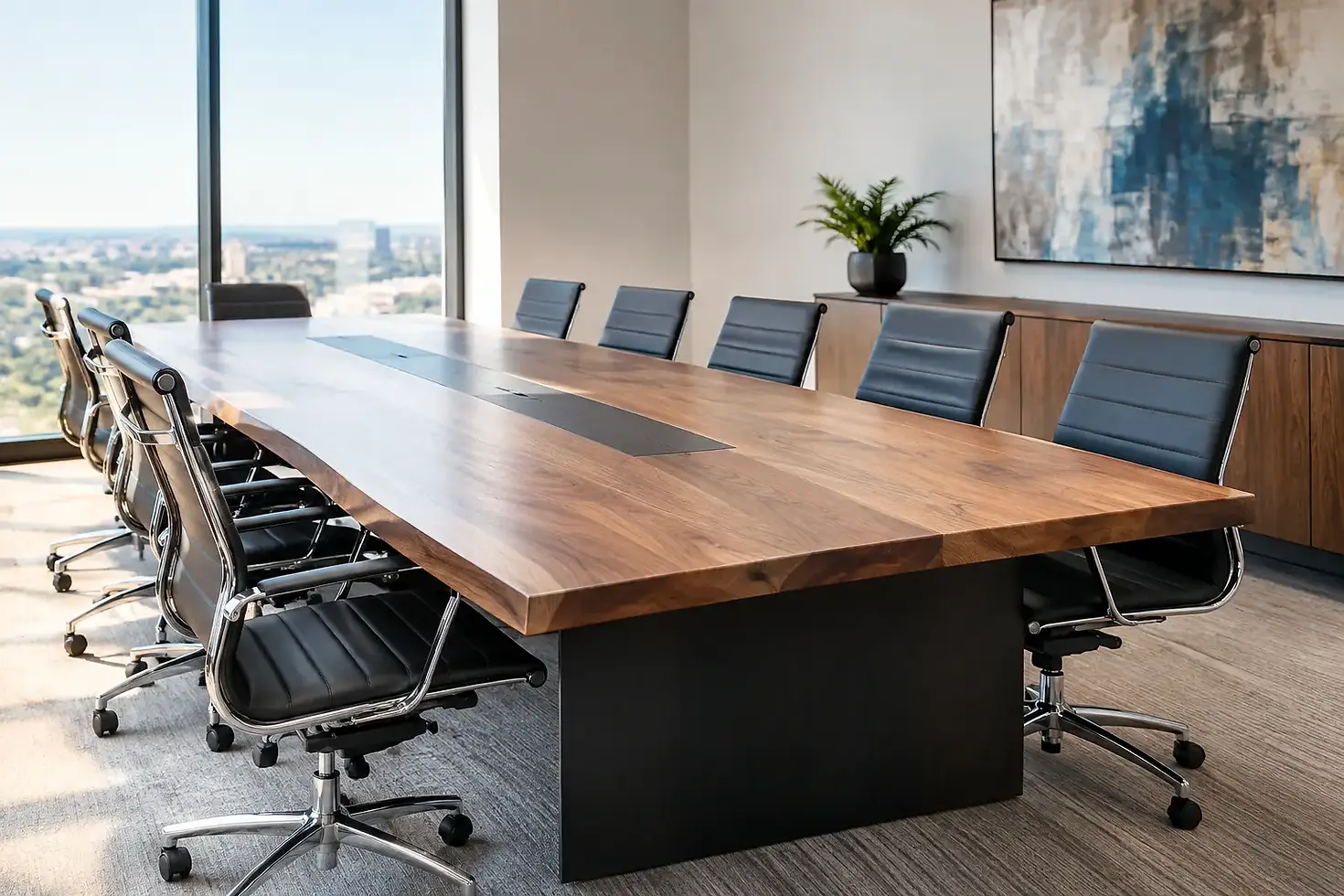
Custom Board Room Tables Built for Better Meetings
A conference room can have the right screens, chairs, and lighting, yet still feel like a temporary space if the table at its center is an afterthought. Custom board room tables change that. They give the room a sense of purpose, support the way your team actually works, and make every client, partner, and employee feel they have entered a place built with care.
At Bull Valley Custom Woodworks, we see the table as more than a large piece of furniture. It is the surface where plans take shape, signatures happen, teams gather, and difficult decisions get talked through. That is why a custom table starts with more than a preferred wood species. It starts with the room, the people in it, and the work they need to do.
Start With How the Room Will Be Used
The best table shape is not always the most familiar one. A long rectangular table may be right for a formal executive setting, especially when there is a natural head of the table. A boat-shaped top can improve sightlines and soften a narrow room. Oval and racetrack forms create an inviting feel while making it easier for people at the ends to participate. Round tables encourage equality in smaller leadership rooms, where no seat needs to carry more authority than another.
Before choosing a shape, consider the meeting itself. Will eight people gather around the table every day, or does the room need to seat 16 during presentations? Is the space mostly used for virtual calls, client reviews, training sessions, or focused planning? A table designed for a weekly leadership meeting will have different priorities than one intended for a busy commercial conference room.
Clearance matters as much as tabletop size. People need enough room to pull out chairs, pass behind seated guests, and move comfortably to a screen or whiteboard. In a tighter room, a beautiful oversized table can make the entire space feel less useful. We help clients work backward from the room dimensions and circulation needs so the finished piece feels substantial without crowding the space.
Custom Board Room Tables Need a Material Strategy
Hardwood brings warmth that laminate and veneer often cannot match. It has natural variation, depth, and a tactile quality that makes a meeting room feel less generic. But choosing a species should involve practical thinking as well as appearance.
Walnut is a frequent choice for executive and design-forward spaces. Its rich brown color, graceful grain, and refined character pair well with black steel, leather seating, stone, and contemporary architecture. White oak offers a lighter, grounded look with excellent durability and a grain pattern that works beautifully in modern, traditional, and transitional interiors. Maple provides a clean, even appearance for brighter rooms, while cherry develops a deeper, warmer patina over time.
For a dramatic centerpiece, a live-edge slab can bring exceptional character to the room. The trade-off is that a natural edge takes up visual and usable space, and it may not fit every corporate environment. A straight-edged plank top, bookmatched slabs, or carefully arranged wide boards can still show off the wood while creating a cleaner working surface.
We have access to more than 70 hardwood species, which gives clients more freedom than choosing from a short list of standard finishes. The right choice depends on the room's light, existing architecture, maintenance expectations, and the impression the business wants to make. A dark walnut table can feel powerful and established. A pale white oak table can make a room feel open, current, and collaborative.
Construction Should Be Built for the Long Haul
A conference table must handle more than everyday meetings. It may support laptops, catering trays, presentation materials, moving chairs, and years of regular use. Solid hardwood construction, properly engineered bases, and professional finishing make a meaningful difference in how the table performs over time.
Wood naturally expands and contracts with seasonal humidity changes. Quality fabrication accounts for that movement rather than fighting it. A well-built top needs the right joinery, support structure, and attachment methods to remain stable while allowing the material to behave as real wood should.
The base deserves just as much attention as the top. Pedestal bases allow greater flexibility for seating, while steel or wood trestle bases can provide a strong architectural statement. A central base can keep chair placement open, but it must be engineered to support the top without wobble. For a large table, multiple bases may be the better solution. There is no single best answer, only the one that fits the size, seating plan, and visual direction of the project.
Design the Technology In, Not Around It
Technology has a way of exposing poor furniture planning. Loose cords running across a wood surface distract from the room and create a cluttered impression. A custom board room table can be designed with power, charging, data, and cable management considered from the beginning.
Pop-up power modules, recessed outlets, USB charging, and discreet cable channels can keep laptops powered without making the tabletop feel like office equipment. In rooms used for video conferencing, it may also make sense to plan for camera placement, microphone access, and screen sightlines before fabrication begins.
The details should feel intentional. A flush-mounted power unit can be selected to complement hardware and base finishes. A cable channel can be concealed below the table or integrated through a center seam. For some rooms, minimal technology is the goal, with only one access point near the middle. For others, every seat needs convenient power. Knowing that difference early prevents costly modifications later.
Details That Make a Table Feel Personal
The most memorable custom tables are rarely defined by size alone. They are defined by the details that tie the piece to the business and the space around it.
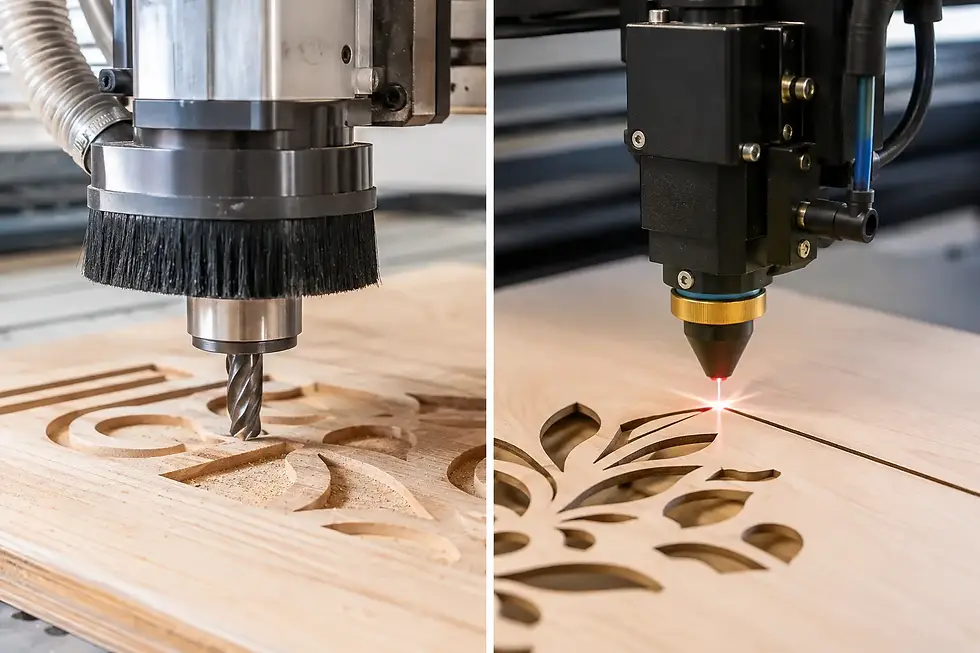
A custom inlay can introduce a subtle line of contrasting wood, metal, or resin. A laser-engraved logo can add a quiet branded element near the center or at the head of the table. Edge profiles can range from crisp and contemporary to softened and traditional. Even the sheen of the finish matters. A lower-sheen finish often feels more natural and forgiving under conference-room lighting, while a higher sheen can create a more formal look but may show fingerprints and reflections more readily.
Consider how the table will age. Natural hardwood is not meant to remain visually frozen in time. It gains character through color change, small signs of use, and the depth that comes from being part of a working space. A durable professional finish protects the wood while allowing that natural beauty to remain visible.
Plan the Project Before the Schedule Gets Tight
A custom table is not a last-minute furnishing decision. Material selection, design approval, fabrication, finishing, and delivery all require thoughtful coordination, particularly for larger commercial spaces or projects involving contractors, designers, or architects.
Bring measurements, photos of the room, finish samples, seating specifications, and any technology requirements to the first conversation. If chairs have already been selected, their width and arm profile will affect seating capacity. If flooring, wall paneling, or cabinetry is still being chosen, a wood sample can help bring the palette together before final decisions are made.
This early planning also helps determine whether the table should arrive as one piece or be built in sections for access through hallways, elevators, stairs, and doorways. A large statement table may need a carefully designed split top or modular base. Done well, those connections remain discreet while making delivery practical.
A boardroom should not feel like a room where people simply wait for a meeting to end. Give the space a table with presence, purpose, and enough honest craftsmanship to support the work that happens around it for years to come.

Comments